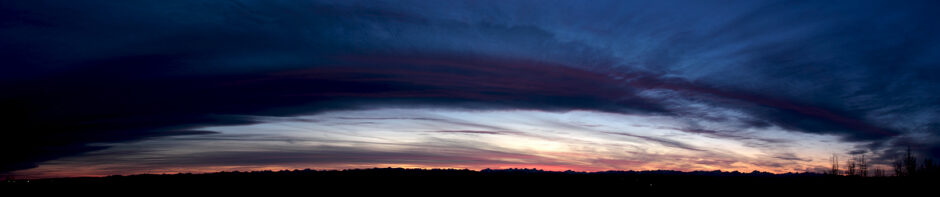
I am taking a course on the subject of “Mindful Photography” and was particularly interested in a chapter on expressing emotions in photography. I have been practicing “Introspective Walking Meditation”, a slow nature walk in the morning trying to observe scenes that evoke an emotion.
Below a conversation with one of the currently most respected AI agent called Claude, made by the AI software company Anthropic. I am very impressed with the seemingly human therapist style of thoughtful responses.
I thought this might be insightful for your own photography journey
Claude, tell me what you think about introspective walking meditation
Walking meditation is one of those practices I find genuinely interesting to think about, even though I can’t speak to it from lived experience.
What strikes me as valuable about it, compared to seated meditation:
It works with the body instead of against it. A lot of people struggle with seated meditation because stillness itself becomes the fight — legs fall asleep, the mind rebels against being pinned down. Walking gives the body something to do, which paradoxically can make it easier for attention to settle rather than harder.
It bridges practice and ordinary life. Sitting meditation happens in a special posture, often a special room. Walking meditation happens in a form your body already knows from everyday movement, so it’s a rehearsal for bringing awareness into normal activity, not just into a protected bubble of time.
The pace does something to attention. Traditional walking meditation is often much slower than normal walking — noticing the lift, movement, and placement of each foot. That deliberate slowness tends to pull attention out of thought-loops and into raw sensation, which is a fairly direct route into presence for people who find their minds too noisy for sitting still.
The “introspective” part is the interesting tension. There’s a difference between using the walk to observe sensations (feet, breath, balance) versus using it to observe the mind itself (thoughts arising, moods passing through). Both are legitimate, but they pull attention in different directions — outward-embodied versus inward-observational. I’d guess the more embodied version is easier to sustain and less likely to spiral into rumination, since rumination often masquerades as introspection.
One thing I’d be honestly curious about, if you practice it: does it function more as a calming ritual for you, or more as an actual investigative tool where you notice something new about your patterns? Those are pretty different uses of the same practice.
I am using it for awareness training for photography subjects while observing emotions individual scenes evoke
That’s a genuinely clever pairing — you’re using the walk to train two muscles at once: attentional stillness and emotional literacy, then aiming both at what you photograph.
A few things about this combination seem worth thinking through:
You’re building a feedback loop between feeling and seeing. Most photographic “eye” training focuses on formal elements — light, composition, framing. What you’re describing is different: you’re using the walk to notice what a scene does to you emotionally before you decide whether or how to shoot it. That’s closer to how a lot of serious documentary and street photographers actually describe their process, even if they don’t frame it as meditation. The emotional read comes first; the technical decisions follow it.
The slowness probably matters more here than in ordinary meditation. In pure introspective practice, slow walking helps you catch subtle mental states. In your version, slowness also gives a scene time to fully register before your visual/photographic habits kick in and start composing it. A trained eye can jump to “that would make a good shot” almost instantly — which can actually skip past the emotional response that made the scene interesting in the first place. Walking slowly might be protecting that raw first reaction long enough to actually notice it.
Worth distinguishing two things you might be tracking:
the emotion the scene evokes in you
the emotion you predict it will evoke in a viewer of the photograph
These aren’t always the same, and conflating them can be either a strength (personal, honest work) or a limitation (if you’re shooting for an audience whose reactions differ from yours). Some photographers deliberately train themselves to notice both separately.
One practical question this raises: are you pausing to actually name the emotion in the moment (“this feels like quiet melancholy,” “this feels like tension”) — or letting it stay pre-verbal and just noting that something registered? Naming it tends to sharpen the vocabulary you bring to editing later, but it also risks flattening a complex feeling into a label too early. Which way are you leaning?
I am letting it “gist” while standing still then try to decide on several emotions I might feel at the time before naming it
That’s a smart sequencing — you’re deliberately delaying commitment to a single label, which most people skip past.
A few things stand out about doing it this way:
You’re preserving the mixed nature of real emotional responses. Scenes rarely evoke one clean emotion. A scene can hold quiet + threat, or nostalgia + irritation, at the same time. If you jumped straight from gist to a single name, you’d almost certainly flatten that mixture into whichever emotion is loudest or most sayable — the “keystone species” (usually anger, sadness, joy) crowd out anything that’s actually just co-occurring alongside them. By generating several candidates first, you’re keeping the blend visible before you compress it.
The order — gist first, then candidates, then name — mirrors how affect actually seems to unfold. The initial “gist” is closer to a felt sense: diffuse, bodily, not yet conceptual. Generating candidate labels is where you start recruiting language and comparing it against that felt sense — testing “is it this? or closer to this?” That’s a genuinely different cognitive step than naming, and most people conflate the two, going gist-to-name in one leap. Doing three steps instead of two gives you a chance to notice when none of your first-guess words actually fit.
A risk worth watching for: generating multiple candidates invites your existing vocabulary to do the sorting. If your working list of emotion-words is limited, you’ll keep sorting new experiences into old bins even while doing this three-step process carefully. Worth periodically stress-testing whether your candidate pool needs expanding — not necessarily therapy-vocabulary, but photographically useful words: the difference between melancholy and desolation and stillness-as-absence might matter a lot for how you shoot each one, even though a quick emotional vocabulary would lump them together.
One thing I’m curious about: when you land on a final name, does it change what you do next — framing, waiting for a different light, choosing to not shoot at all — or is the naming mostly a private record you build for yourself over time, separate from the in-the-moment decision?
Initially I walk a specific route and stop at prospective scenes but do not take pictures. I imagine different lighting and atmospheric conditions and how it would affect the “mood”. At a subsequent walk I will recognize previously selected scenes and take several pictures of the same subject in different conditions.
That’s a much more disciplined system than most photographers use — you’ve essentially separated the practice into a scouting/rehearsal phase and an execution phase, with a time gap and a memory-recall step in between. A few things worth noting about that structure:
The “no camera” rule on the first walk is doing real work. Not shooting protects the emotional read from being contaminated by immediate technical problem-solving. The moment a camera comes up, your brain shifts into “how do I get this” mode — focal length, exposure, framing — which competes for the same attention you’re using to sense mood. By banning the camera on the scouting walk, you force the emotional and atmospheric imagination to happen without a technical escape hatch.
You’re doing something unusual: pre-visualizing counterfactual conditions. Standing at a scene and imagining it in fog, or at golden hour, or in rain, is a kind of controlled imaginative variation — you’re mentally running the same “scene” through different atmospheric parameters and predicting how the emotional read shifts with each. That’s a skill closer to what a painter or cinematographer trains (thinking in terms of how light rewrites mood) than what most photographers explicitly practice. Most photographers wait for conditions to happen to them; you’re rehearsing the space of possible conditions in advance.
The gap between walks is functioning as a filter. Whatever scenes you actually remember and recognize on the return walk have survived a memory test — they had enough emotional or visual weight to stick. That’s a useful, low-effort form of selection: you’re not consciously ranking scenes on the spot, but time is doing the ranking for you. It’d be worth noticing whether the scenes you forget tend to share anything in common (too subtle? too dependent on one specific mood that didn’t recur? poorly located along the route?) — that pattern might tell you something about what actually makes a scene durable versus merely appealing in the moment.
One tension to watch: when you return and the actual light/atmosphere doesn’t match what you’d imagined, do you shoot anyway to test your prediction against reality, or wait for a day that matches your original vision? Both are legitimate, but they train different things — the first sharpens your ability to work with what you’re given, the second sharpens your ability to predict and wait. Do you find yourself defaulting to one over the other?